The confusion starts at the booking stage. People search for “Zhangjiajie tickets”, find three different prices, and assume one of them is a scam. In fact the city holds several unrelated scenic areas, each with its own gate, its own ticket, and its own rules about how long that ticket lasts.
The one everyone means is Wulingyuan — the sandstone pillars, the film locations, the place the photographs come from. It is 165 yuan, it lasts four days, and it is the only ticket in the city with that kind of shelf life.
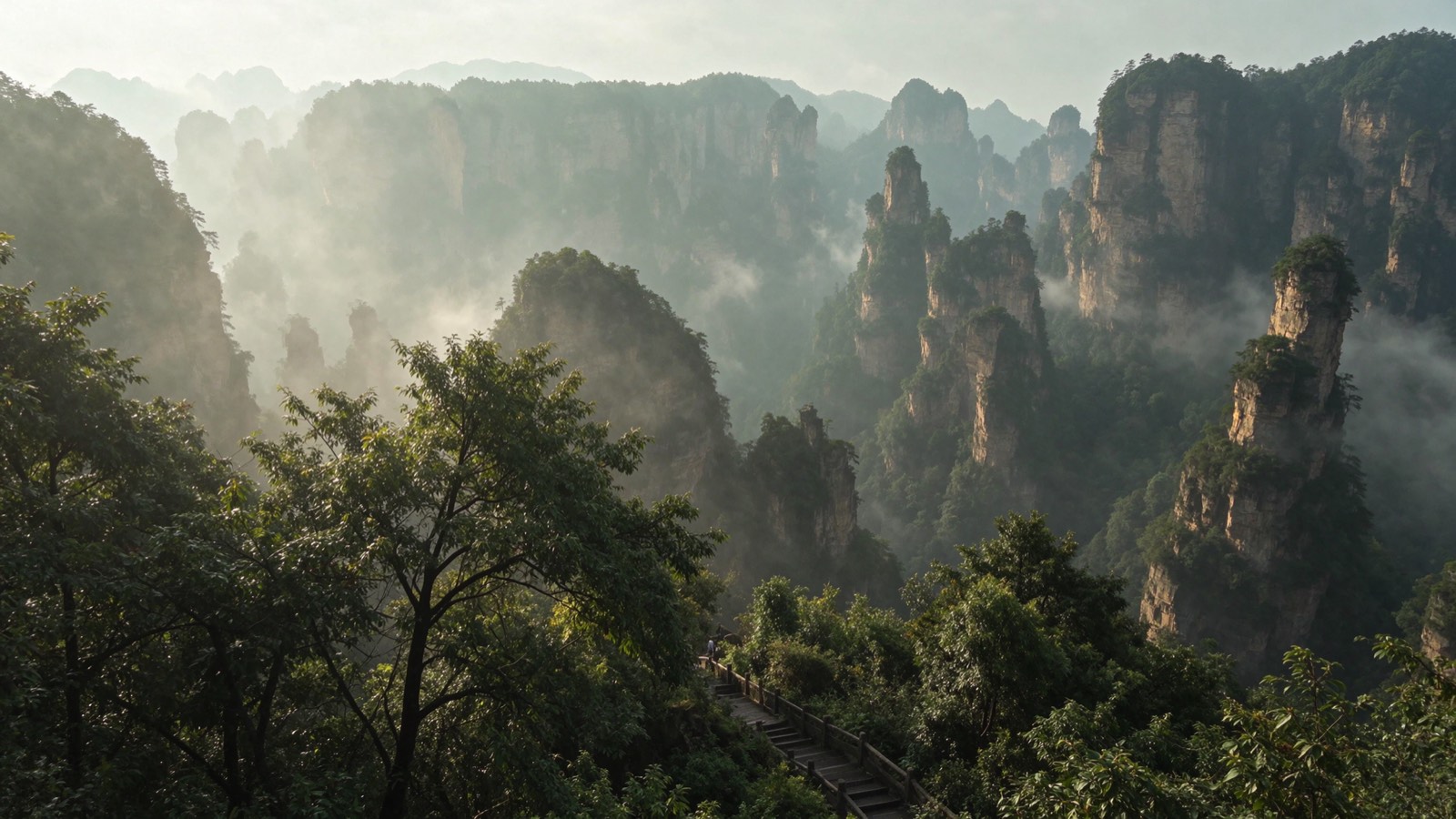
Yuanjiajie, Tianzi Mountain, Golden Whip Stream, Yangjiajie. One price, all season, valid four consecutive days from first entry.
A separate mountain above the city, with the glass walkway and the 999 steps. The gate is 72; the cable car is the expensive half.
Bailong elevator 65 up. Tianzi, Yangjiajie and Huangshizhai cables 72 to 76. The Ten-Mile Gallery train 38.
Four days is not generosity, it is arithmetic
The pillars are spread across a plateau the size of a small city, and the roads between them are long. A single day gets you one valley and one viewpoint, plus a great deal of standing in a queue for the elevator. The four-day validity exists because two days is the realistic minimum and three is comfortable.
Note what the 165 does and does not buy. It is the admission figure set by the provincial price bureau; whether the internal shuttle buses come folded into it or are quoted separately depends on the ticket package sold at the gate, and combined tickets are advertised higher. Assume the lifts are always extra.
Tianmenshan is not part of that ticket
This is the mountain with the hole in it, directly above Zhangjiajie city, reached by a cableway that runs from the railway station area up through the clouds. The gate price was reset at 72 yuan by the provincial development commission; the cable car, the shuttle and the escalators are where the money actually goes, and combined tickets are sold near 280.
It is a single-day mountain, timed entry, and the glass walkway along the cliff is the reason most people come. If your trip is about the sandstone pillars, this is a different outing with a different photograph.
Inside Wulingyuan, you pay to move
Nothing inside the park is free except walking. The Bailong elevator — the glass lift built into the cliff, two minutes for what would be two hours of steps — is 65 one way. The cables at Tianzi, Yangjiajie and Huangshizhai are 72 to 76. The little train along the Ten-Mile Gallery is 38, and is the one ride most people regret not taking, because the valley road is flat and dull on foot.
Prices at the counters change with the season and are posted at each station. Bring the cash equivalent in a payment app — foreign cards work in the ticket offices but not reliably at the small stations.
An order that works
Day one, Golden Whip Stream on foot in the morning — flat, shaded, ten kilometres of it if you go end to end — then the elevator up and Yuanjiajie in the afternoon. Day two, Tianzi Mountain and the Yangjiajie ridge, cable up, walk the rim, cable down. Day three, either the second valley you skipped or Tianmenshan on the way out, since the cableway base is near the station.
Two nights in Wulingyuan village rather than the city saves an hour each way, every morning.
Arriving
Zhangjiajie West is the high-speed station, with connections from Changsha and beyond; the airport is small and mostly domestic. The park's main gate at Wulingyuan is about forty minutes from the city by road, and the shuttle from the gate to the elevator and the trailheads is part of the day whether you planned it or not.
If this is one stop on a longer route, the Chengdu page covers the western approach. For background on moving between cities by rail, see high-speed rail.
Official sources
- Hunan Provincial Development and Reform Commission — Wulingyuan core scenic area ticket at 165 yuan, winter and summer rates unified from 1 January 2025, valid four consecutive days.
- Same commission, 2025 — Tianmenshan gate price set at 72 yuan, with concession categories listed; cable and shuttle charges separate.
Verified 24 November 2026. Lift and combined-ticket prices are set by the operators; the board at each station is the number that counts.